Cursed Gemstones: Beauty, Power and a Legacy of Misfortune
Friday the 13th has long been linked to superstition, bad luck and the darker corners of history — making it the perfect day to explore some of the world’s most infamous cursed gemstones. For centuries, extraordinary jewels have been accompanied by tales of tragedy, betrayal and untimely deaths, leaving many to wonder whether their beauty comes at a terrible cost.
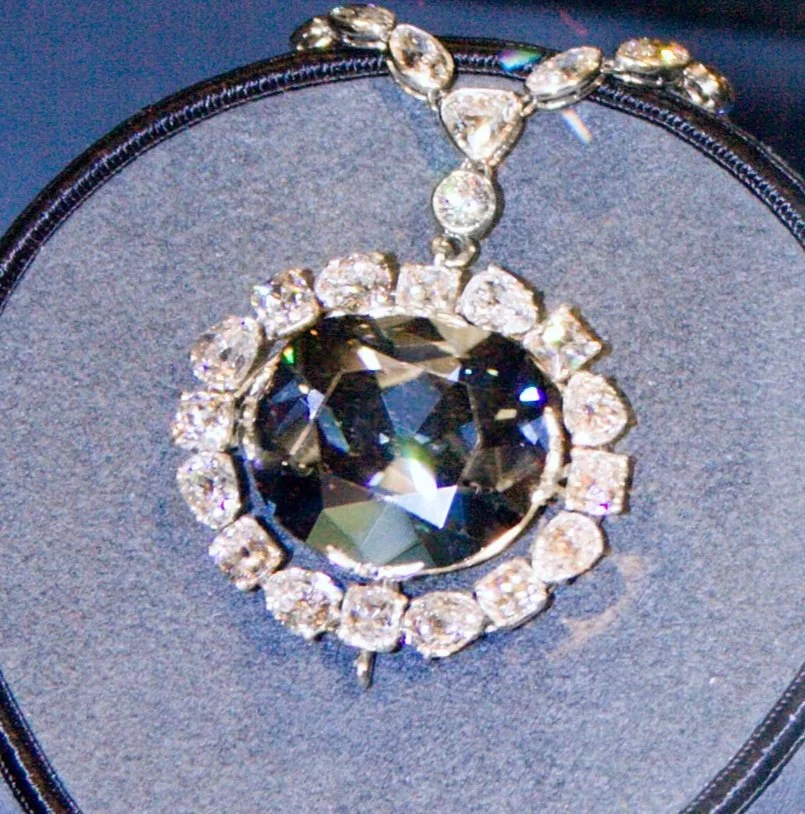
The Hope Diamond
Few gemstones inspire as much fascination — or fear — as the Hope Diamond. This rare 45.52-carat blue diamond began its recorded history in 1668, when French traveller Jean-Baptiste Tavernier acquired it in India. He later sold the stone to King Louis XIV, and it became part of the French Crown Jewels.
During the chaos of the French Revolution in 1792, the jewel was looted and disappeared. Twenty years later, a diamond with strikingly similar characteristics appeared in London. According to the Smithsonian, strong evidence suggests it was the recut “French Blue,” now reborn as the Hope Diamond.
The stone passed through royal hands and wealthy collectors, but misfortune seemed to follow it relentlessly. Its most famous owner, socialite Evalyn Walsh McLean, believed she could outwit the curse. She wore it freely and even hosted extravagant “Find the Hope” parties, hiding the diamond on her estate and inviting guests to search for it. Instead of breaking the curse, her life unravelled — the loss of her children, her marriage, her fortune, and finally her own life. Today, the Hope Diamond rests in the Smithsonian, where many believe its curse lies dormant at last.
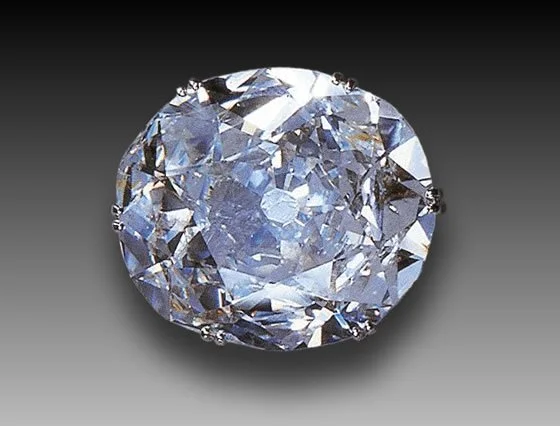
The Koh-i-Noor
The Koh-i-Noor’s legend stretches back centuries. Discovered in India’s Golconda mines, it is said to have once served as the eye of a Hindu goddess statue before entering the possession of Shah Jahan, the emperor who built the Taj Mahal. After a coup led by his own son, Shah Jahan was imprisoned and the diamond passed through numerous rulers — many of whom met violent ends.
When the Koh-i-Noor was sent to Queen Victoria in 1849, disaster followed its journey. Cholera broke out onboard, violent storms battered the ship, and the diamond was almost lost entirely. Today, it sits in the Tower of London, accompanied by a long-standing belief that it carries a curse allowing only women to wear it. No male heir to the British throne has ever dared to do so.
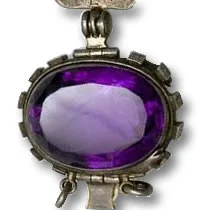
The Delhi Sapphire
Perhaps the most disturbing tale belongs to the Delhi Sapphire — which is not a sapphire at all, but an amethyst. Looted from the Temple of Indra and brought to Britain in 1857, the gem left a trail of misfortune behind it. Owners suffered financial ruin, illness and repeated disasters.
Scientist Edward Heron-Allen became so convinced of its curse that he attempted to give it away — twice — only for it to be returned after both recipients experienced severe misfortune. He even threw it into Regent’s Canal, but it was dredged up and returned to him. Eventually, he sealed the stone inside seven boxes, surrounded by charms, with a written warning advising future handlers to throw it into the sea. Instead, it was sent to the Natural History Museum, where it remains today. Even museum staff have reported unsettling experiences linked to the gem.
Curse or Coincidence?
Whether you believe these stories are rooted in the supernatural or are simply the result of power, greed and turbulent history, one thing is certain — these gemstones have left an unforgettable mark on those who possessed them.
This Friday the 13th, as superstition lingers in the air, the question remains: are these jewels cursed… or are they mirrors of humanity’s darkest moments?